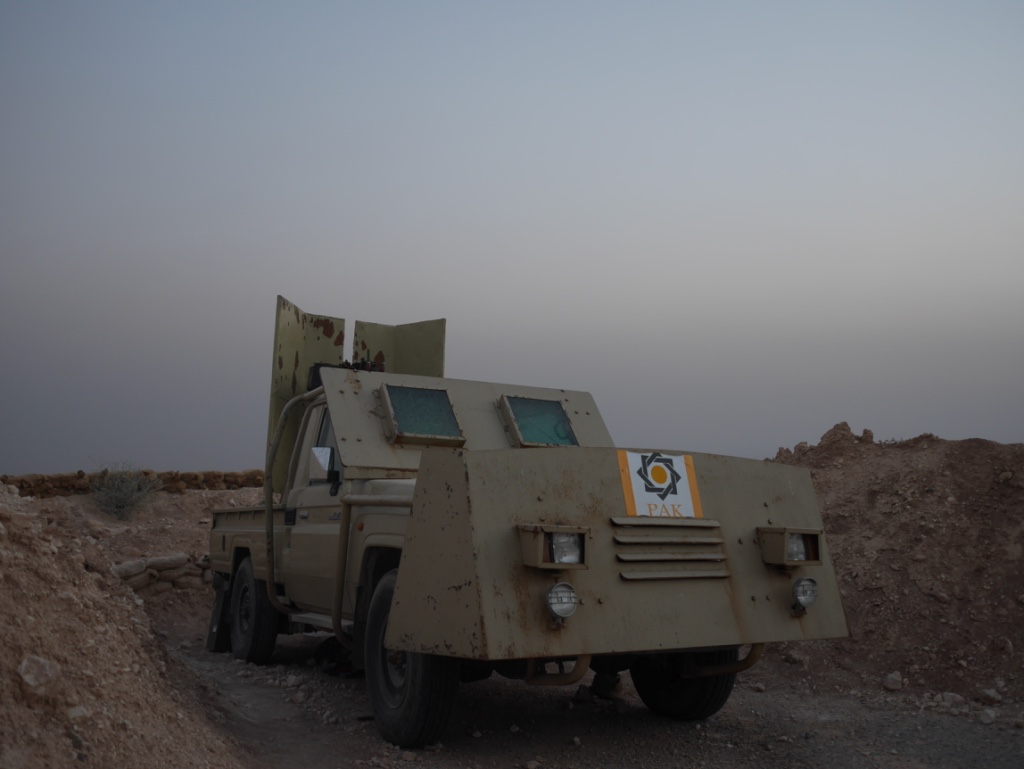
New York- My frontline work in Iraq in the heady days of the war against IS-known as Combined Joint Task Force-Operation Inherent Resolve in American security speak-was cited in a research report published by the Rand Corporation. The report titled “Operation Inherent Resolve-U.S. Ground Force Contributions” details four battles in al-Anbar and Ninewa governorates.
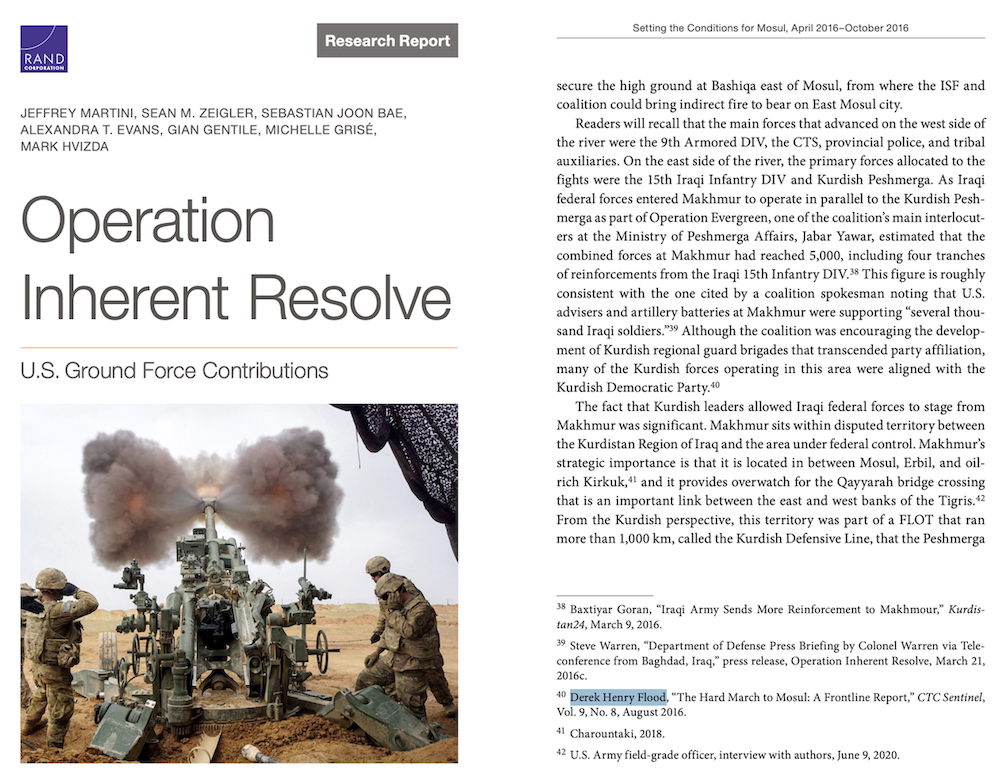
It delves deeply into the Special Operations doctrine of “by, with, and through” whereby U.S. forces conduct military operations where the bulk of boots on the ground are indigenous war fighting groups be they traditional state actors-ie Iraqi Army and Federal Police-or hybrid actors like the Peshmerga of the Kurdistan Regional Government (KRG) who can be perceived as a sub-state force, militia or rebel group depending on specific contexts.
By, with, and through,” if implemented properly, greatly reduces the number of American troops in theater by training and equipping local partner forces to do the bulk of infantry fighting while backing them up with a targeted air campaign from high above with their local partners painting the targets in the battlespace. In their CJTF-OIR efforts to partner with Kurdish forces of varying stripes, per example, American Special Operators force minimalist strategy quickly becomes complexified as the lines blur between the Westphalian concept of loyalty to a nation-state and ethno-linguistic or religio-cultural identities. In the case of northern Iraq, the Americans were ostensibly partnering with Kurdish Peshmerga who were nationals of the Republic of Iraq. But in reality a portion of local ground forces were in fact Iranian nationals from the Parti Azadiye Kurdistan (PAK). The PAK fighters also refer to themselves as Peshmerga and are based in Iraqi territory governed by the KRG.
While they were helping their hosts and in turn their American sponsors, to beat back IS, the PAK’s fundamental aim is to combat the IRGC and Basij in Iranian Kurdistan with their ultimate goal of creating a Kurdish nation-state. This goes against decades old American policy of respecting the post-war state sovereignty (Kosovo and South Sudan aside). Though unless one has been living under a rock, the norms of the American order such as respecting territorial integrity are quickly falling by the wayside with a deadly mix of political immaturity and brash unlearned populism ruling Washington at present.

An inherently problematic element of this SOF-style doctrine of sorts is that there is almost never a plan for the day after the common objective is achieved ie the fall of Baghouz in March 2019 that formally ended IS’s claim to a territorial caliphate. Particularly if the firmly non-state actors like the YPG in Syria or the YBS around Mount Sinjar have goals well beyond the scope of the passing immediacy of Washington’s security interests that coincide with local surrogate forces who were already in mortal danger well before the White House decided it was time to act.
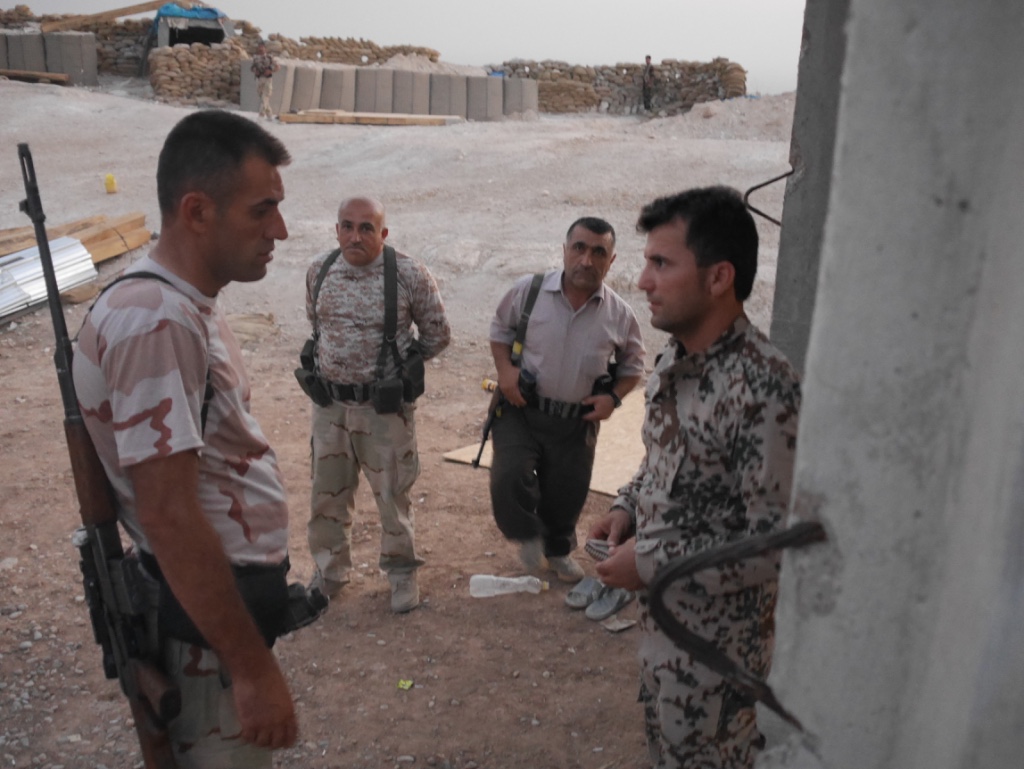
As an American or Westerner or Anglophone researcher/journalist who has often found himself at the tip of the spear in these hybrid warfare theaters, I often quietly fret what will become of the forces I’m working alongside that the United States is (very temporarily) partnering with. At the end of the proverbial day I know Lindsey Graham is not coming to save these guys when the chips are down. With the wildly misguided Iran debacle currently taking place and the sudden interest in Iranian Kurdish insurgent groups entering the fray, pne must understand that the aims of a group like the PAK and the American military vis-a-vis the velayat-e-faqih regime in Tehran and Qom are deeply divergent. The PAK, like the PJAK, seeks to carve out a Rojhilat (eastern Kurdistan) statelet from the Iranian state whereas their Mossad or CIA contacts seek to overthrow the regime as a whole rather than, say, liberate Sanadaj and turn it into the next Sleimani.