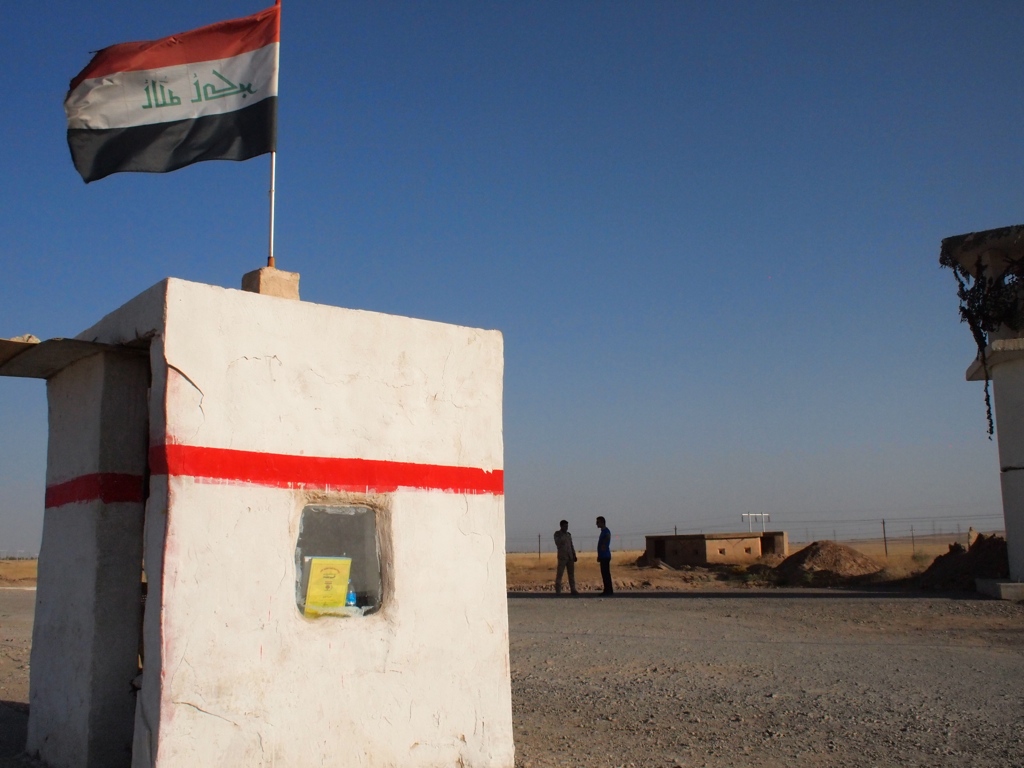
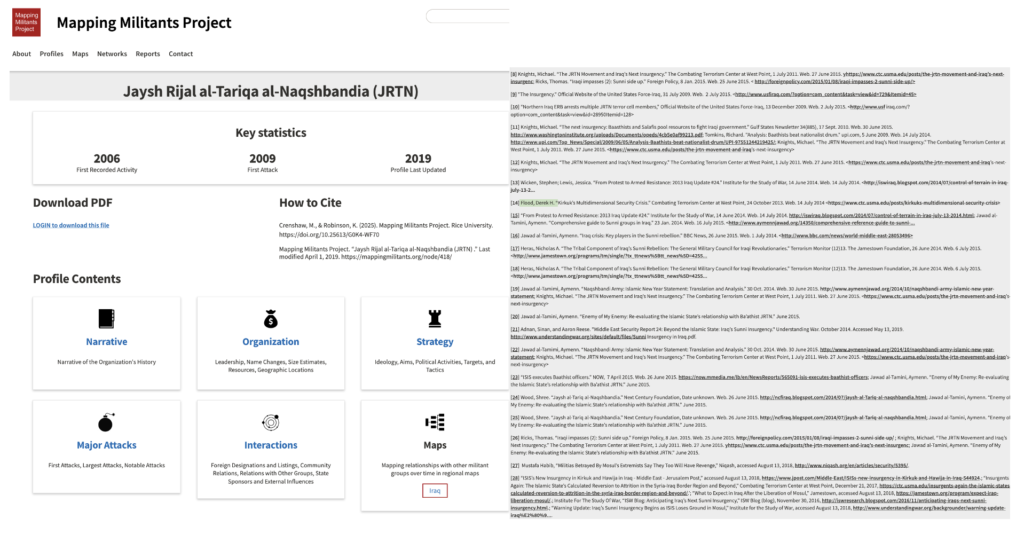
Cleveland- My fieldwork in Iraq’s Kirkuk governorate on Jaysh Rijal al-Tariqa al-Naqshbandia (JRTN) was cited by the Mapping Militants Project at Houston’s Rice University. JRTN was led in the shadows by the late, enigmatic Izzat Ibrahim al-Douri, the last major figure of the Hizb ul-Ba’ath regime to lead a resistance movement against the American occupation. The ideology of the JRTN was a hodgepodge of ostensibly militant Sufism, pan-Arabism, and retrograde Arab socialism with its membership comprised of disenfranchised Sunni Arabs. JRTN was both fighting Iraq’s central government that it viewed as a cabal of Shia chauvinists out to humiliate their community as well as attacking the forces of the Kurdistan Regional Government-KRG which it considered a threat to its wished for perception of Iraq as monolithic ethnic Arab state.
The midpoint of 2013 was a critical moment in a fractious post-2003 Iraq because no single militant non-state organization had gained a monopoly or near monopoly on violence in the country’s under-governed hinterlands. Comparatively secular JRTN fighters made common cause with salafi-jihadi Islamic State in Iraq-ISI (before the Levant or ash-Sham was to be added-ISIL/ISIS) terrorists in the name of fighting the shared enemy that was the Iraqi state/KRG/American forces or often just whomever was in their way.
At the time of my writings, the world was far more concerned with what was transpiring to the northwest in neighboring Syria and failed to truly comprehend how interconnected to two conflicts really had become at that moment. ISI’s gruesome leader Abu Bakr al-Baghdadi secreted himself back and forth across the eroding Sykes-Picot line with relative ease. You may recall that the last American troops had crossed into Kuwait over a year and a half earlier (December 2011) just as this region was undergoing another round of instability known as the Arab Spring.
Iraq was incredibly vulnerable at the time with no great power present to prop up the pro-Iranian Prime Minister Nouri al-Maliki. Al-Maliki’s doing nothing to win over disaffected Sunnis in al-Anbar, Salah ad-Din and so forth resulted in at least some of that populace welcoming the ISI takeover of their cities and towns. The ISI invasion certainly did not occur in a vacuum.
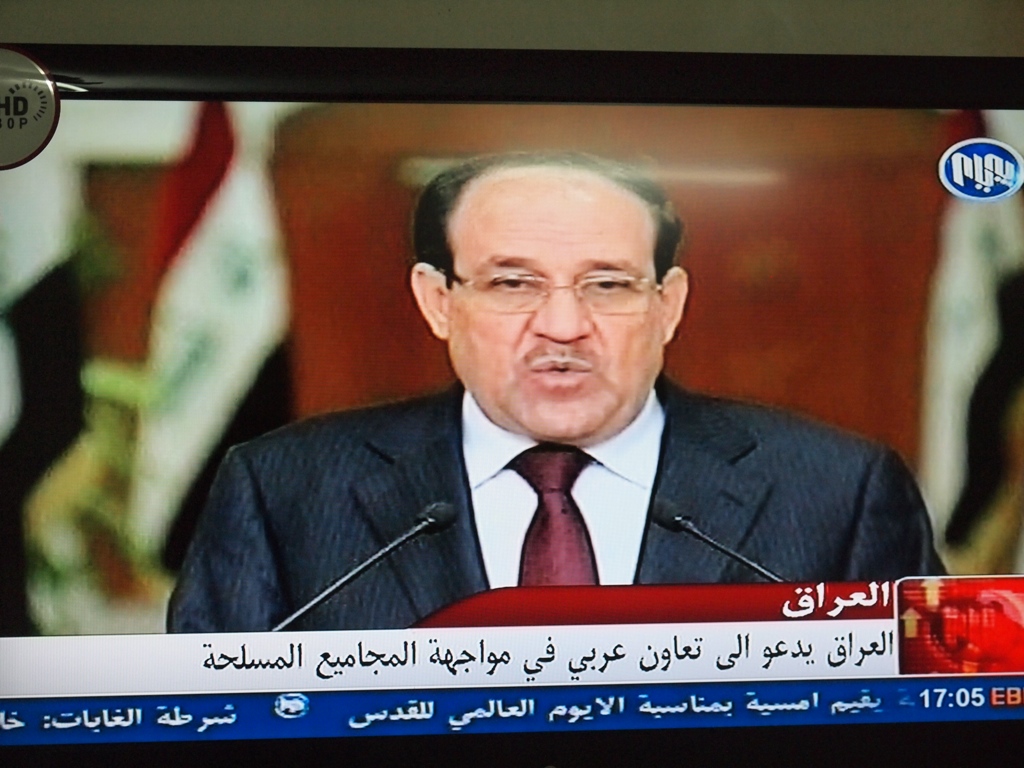
PM al-Maliki could claim to have help restored Iraq’s sovereignty with the exit of the Americans having occurred on his watch but his government did nothing to enable security forces to be able to even blunt the ISI streaming across the crumbling border with al-Assad’s Syria and massacring Shia cadets at Camp Speicher and committing genocide against the isolated Ezidis of Sinjar.
The Mapping Militants Project is co-run by professors at Stanford University in northern California and Rice University in south Texas. I’m happy to see my work made a small contribution to the understanding of non-state actors in our world’s most critical and volatile region. Iraq has been long suffering from a 20th century beleaguered extractive economic model that hasn’t undergone a top-down societal makeover akin to its GCC neighbors sitting south of Basra. Tens of millions of people call Iraq home and a vocal minority have been calling for radical change on behalf of their society as a whole for a good few years now. Ordinary Iraqis most often reject violent extremism while a minute few insist on engaging in religio-political violence that has oft had the effect of tarring an entire nation.