Between Guantánamo and Hellfire

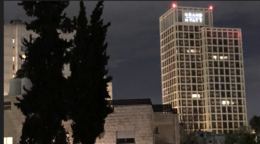
The campus of the Endolite prosthetic clinic in Petaling Jaya, Malaysia photographed on August 28, 2010. According to p.158 of the 9/11 Commission Report, Walid bin Attash ("Khallad")-who appeared with Khalid Sheikh Mohammed at the Guantánamo tribunal on May 5, 2012-traveled to Malaysia to obtain a replacement prosthesis here. ©2010 Derek Henry Flood

New York- I have the lead story in today’s edition of Asia Times Online about the hearing of KSM and Khallad at Guantánamo on Saturday, the killing of Fahd-al Quso in southern Yemen (or South Yemen if you prefer) by a drone strike on Sunday, and the apparent leak on Monday of the disruption of a suicide bomb plot believed to have the hand of AQAP’s Ibrahim al-Asiri. A very interesting succession of events to say the very least. The article contains some of my on-the-ground research on the background of the USS Cole attack and how that plan intersected with the 9/11 ‘planes operation.’ 

The Kalashnikov

The Marxist-imbued Mozambican flag bearing the Kalashnikov rifle. Source: Wikipedia

New York- The Avtomat Kalashnikova assault rifle, known popularly as the AK-47 or Kalashnikov, became one of the defining symbols of Third World national liberation movements and a physical manifestation of anti-imperialist thought in the second half of the twentieth century. The Kalashnikov appears most notably Frente de Libertação de Moçambique (FRELIMO)-designed flag of Mozambique pictured above. Hezbollah has a Kalashnikov-like weapon pictured on its yellow and green flag as a symbol of its persistent resistance to Israeli occupation and military hegemony. During the ‘summer war’ in July and August of 2006, the Ba’athist regime in Syria, one of the Shia group’s principal external state backers, had Hezbollah’s yellow banners flying up and down its Mediterranean coast to drum up Syrian domestic support as well as that of visiting GCC tourists. Syria’s cities were plastered with these what should be incongruous visuals that summer. Anyone who covers the developing world’s violent conflicts is likely intimately and awkwardly familiar with the Kalashnikov’s wood and metal sinews coupled with that unmistakable banana clip.

Wild jumble of Hezbollah and Ba'athist propaganda posters in Latakia, Syria on July 29, 2006. Note the visage of Imam Hussein to the left mixing in Shia religiosity. I find the central image of particular interest with Hezbollah Secretary-General Seyyid Hassan Nasrallah hoisting the aforementioned rifle of ambiguous provenance over his head. The image seems to suggest that if it came down to it, Nasrallah himself would pick up a gun and join the fight. ©2006 Derek Henry Flood

An NTC rebel fighter loads a clip into his Kalashnikov near al-Aghela, Libya on March 4, 2011. ©2011 Derek Henry Flood

An FSA rebel fighter points his Kalashnikov toward the frontline in Ain al-Baida, Syria on January 29, 2012. ©2012 Derek Henry Flood

A pair of Jamiat-e-Islami Afghanistan (Northern Alliance) fighters tote their Kalashnikovs at a position at Ai Khanoum, Afghanistan at sunset on November 6, 2001. ©2001 Derek Henry Flood

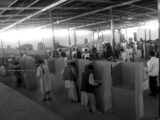
An Afghan National Police officer brandishes a Hungarian AMD-65 rifle (an AKM variant) while patrolling a bazaar in Kabul during Afghanistan's 2009 presidential elections. ©2009 Derek Henry Flood

On June 27, 2010, a sandal-clad Kyrgyz soldier inspects vehicles at a checkpoint in Osh, Kyrgyrzstan during that country's constitutional referendum vote on the devolution of presidential power in the wake of deadly inter-ethnic conflict in the Ferghana Valley earlier that month. ©2010 Derek Henry Flood

In going through old photo portfolios this week I discovered an image I’d nearly forgotten I’d taken of a massive Soviet-style Kalashnikov monument on the road in central Iran. I love the photo not for its artistic merit obviously but for what it symbolizes. I tweeted the photo to C.J. Chivers, author of the definitive Kalashnikov book, The Gun.  In return he created a kind blog post featuring my snapshot which I’ve reposted below.

Screen grab from C.J. Chivers The Gun blog on my Iran photo. This monument appears to me to a fascinating mix of millenarian Iranian Shi'ism and Marxist realist public art. Stylistically the sculpture appears appears quite disjointed as if it was either created by more than one artist or was adapted or recycled from a previous monument. ©1999 Derek Henry Flood

The Fabled City

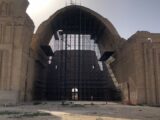
On 11 August, 1999, I photographed a total solar eclipse from the Arg-e-Bam (Citiadel of Bam) in southeastern Iran's Kerman Province. On 26 December, 2003 the citadel was largely destroyed in a calamitous earthquake which killed almost 27,000 people, nearly a third of the city's inhabitants. ©1999 Derek Henry Flood

New York- In sorting through some old belongings today I found a couple of now ancient-seeming portfolios which I went to a lot of trouble to make at the tail end of the portfolio era. In what turned out to be fruitless, expensive exercises in futility I spent countless hours (not to mention loads of money on ink and specialty papers) printing attempts at gorgeous images. I scanned some of the images and decided to show them here on this blog. Though these images may appear, and perhaps are, somewhat random, they were part of my earliest project concept which I titled “The Fabled City.” I envisioned it as grassroots, multimedia education project to enlighten denizens of American cities about the complex civilizational crossroads where South Asia, Central Asia, and the Iranian Plateau intersect.

The ultimate goal of the project was to then inform the public about the people and socio-cultural history of Afghanistan working past the entrenched framework of Afghanistan clichés as a “buffer state,” “failed state,” or worst of all, “the graveyard of empires.” Could you imagine if a coterie of overeducated policy wonks and far removed armchair historians constantly referred to the country you call home as some sort of “graveyard?” Or in the case of Pakistan, “the world’s most dangerous place?” Or Iran being “evil” in some way?  Though all of these terms are or were meant to have a purely geopolitical resonance (in theory), it is a short jump to the demonization of a culture particularly when punditry is then mixed with geographic distance.

Following the solar eclipse pictured above, a group of Afghan men depart the adobe Bam complex, the world's largest mud brick structure. Today this spectacular site lay in ruins. ©1999 Derek Henry Flood

I had an idea-somewhat indicative of the era-to do a guerrilla-style wheatpaste poster campaign in the manner of a 1990s New York City street artists like Cost and Revs (who have long since faded into relative obscurity). I thought I could bring awareness to this region-much of which had been cutoff the the outside world since 1979-by starting a one man grassroots poster campaign. I was gearing up to embark upon this idea just as 9/11 shook this city. My plan to photograph Taliban-ruled Afghanistan (ie the Islamic Emirate) after the winter snows thawed in the spring of 2002 morphed into doing war photography in the Islamic State of Afghanistan among the United Islamic Front for the Salvation of Afghanistan (ie the Northern Alliance) some six-months ahead of schedule. I still clung to this idea well into the 9/11 wars.

At the height of the war in Takhar Province in early November 2001 I managed to visit the broken columns of the heavily looted Graeco-Bactrian city of Ai Khanoum overlooking the Panj River dividing Afghanistan and Tajikistan. In Iraq in May 2003 I climbed the humongous, spiraled minaret of Malwiya in Samarra before things turned ugly in that country’s nihilistic fitna and anti-occupation war. The minaret was later attacked by insurgents in 2005 after American soldiers carelessly used the ancient monument as a lookout post. From the top of the Abbasid calpihate-era Malwiya, I gazed at the magnificent al-Askari shrine housing the bodies of the 10th and 11th Twelver Shi’ite imams, its gilded cupola shining brilliantly under the Iraqi sun. The sacred al-Askari dome was later demolished by Sunni sectarian fighters in February 2006 and its minarets were destroyed by them in June 2007.

I was digging around in a musty closet and unearthed these decade-old prints which I then hastily scanned in a consumer Epson flatbed scanner. I don’t have much use for these rather benign, old prints now. Maybe I will finally paste them up around the Brooklyn or Queens waterfront as I intended to do exactly a decade ago. The Fabled City was crushed in the collapse of the Twin Towers. Unending war and terror would come to rule the day rather than the elements of architectural elegance and sophisticated history I had hoped to use as tools to foment a better day.

The Arg-e-Karim Khan at night in Shiraz, Iran. Note the incredible tile work on the tower. ©1999 Derek Henry Flood

The Abassi mosque complex in southern Punjab Province's Cholistan Desert outside Bahalwalpur, Pakistan. Under the blistering desert sun, the local men had me stand on a marble slab in the geometric center of this courtyard that was inexplicably cool even at high noon. ©2000 Derek Henry Flood

The reflecting pool in front of the tomb of Jalaluddin Surkh-Posh Bukhari at the Uch Sharif complex outside Bahalwalpur, Pakistan. Bukhari was a prominent Sufi evangelist and is revered as a saint by regional practitioners today. As his name denotes, he originated from Bukhara in what is now present day Uzbekistan. This place to me represented the idea of Central Asia and South Asia being part of one cultural and religious continuum. Here the facade of the Fabled City rises into the sky. ©2000 Derek Henry Flood

An Overview of Syria’s Armed Revolution

April 23rd, 2012 derekhenryflood No comments

The author's first trip to Syria in 2002. Umayyad masjid, Damascus. ©2002 Derek Henry Flood

New York- I have the cover story out today in the April issue of the CTC Sentinel, the Combatting Terrorism Center at West Point’s monthly publication. This article is based on my most recent trip to northern Syria in January as well as my earlier travels in the country as pictured above. This piece was some time in the making and virtually nothing in Syria has improved in the interim in my view. Kofi Annan’s shuttle diplomacy is an utterly abject failure. UN soft power will do nothing to solve this painfully festering crisis.

The Free Syrian Army has suffered a series of territorial defeats since the beginning of 2012 including being routed from the position in Idlib I visited according to a colleague’s report in March. Despite these setbacks along with Turkey’s failure to act in any meaningful way (sorry conspiracy theorists who believe Erdogan is unequivocally aiding the FSA), the rebels don’t seem to be yielding their will even with their “tactical withdrawals” over the last few months. So far NATO has stuck to its guns of insisting Libya was not a “model” but a unique, one-off operation that will not be repeated any time in the near term.

Abaya (or chador)-clad women stroll through the brilliant grounds of the Umayyad masjid, considered the fourth holiest place in the Islamic world. ©2002 Derek Henry Flood

I think most ordinary Syrians as well as rebels have long ago almost entirely given up on the idea of any sort of external intervention, military or otherwise, including even rather meek offshore balancing.  Saudi and Qatari talk of overtly arming the FSA seems to have gone nowhere. The rivalries within the GCC are intense, egotistical battles among some of the world’s most successful self-aggrandizers. That makes it near impossible for even two of the six member states to act in unison-the subjugation of Manama by Riyadh being the current exception. If the FSA is waiting for the GCC to get its act together on Syria, they may be waiting a long time.

I remember seeing this poster for George Clooney for the Italian eyewear brand Police and thinking that an a-list star of his ilk would never pitch such a product back home. Perhaps Clooney should have put his efforts into Syria rather than Sudan. I recall seeing his visage in several places in Damascus that summer a decade ago. ©2002 Derek Henry Flood

There has been a lot of discussion about the emergence of so-called black banners in the Syrian conflict (which is a much more significant issue in Mali/Azawad at the moment). Of the cross section of Syrians I interviewed at the beginning of this year, everyone-even those moderately sympathetic to an Ikhwan agenda-eschewed the idea of their Syria becoming one more star in the constellation of global jihad. The fighters on the ground were certainly Sunnis drawn from the conservative milieu present in Syria’s northern governorates, but those obvious circumstances do not a jihadi make.

One of the more absurd “points’ in Annan’s UN-Arab League plan was to twist Assad’s arm into letting international journalists in with what I suppose should be unrestricted access. Not bloody likely. Judging by the tragic fate of France-2 cameraman Gilles Jacquier who was killed on a dog-and-pony show tour of Homs in January, I don’t have much confidence that journos would be any more safe if legally admitted to the country than if not. You have a vain, materialistic regime armed to the teeth that is suppressing all forms of dissent and shows no sign of letting up.

The war in Syria has ultimately become a contest of wills. The FSA, many international players, and the non-violent opposition all believe Assad is doomed to fall and it is all a matter of when, not if. But as the unceasing violence drags on, it is clear the Assad and those in his inner circle believe he can ride this one out. And it is to this point where I think the rash, extra-judicial killing of Qaddafi did immense damage to the quarters of the Arab world still in the bitter throes of revolution. It became very clear to Bashar al-Assad et al that the end of a regime did not necessarily mean quiet exile. It could end in death. This gives Assad that much more impetus to keep fighting-which he is clearly doing.

Since enough time has gone by I decided to finally upload a short film I made (which is part of the background for the CTC article shown above) onto Youtube because…well…otherwise it will never get seen. It’s my (very) rough first person account of my trek to northern Syria’s Idlib Governorate in late January after much networking in Antakya, Turkey.

No End in Sight to Bahrain’s Troubles

April 22nd, 2012 derekhenryflood No comments

New York-Busy working on some last minute touches for an article coming out tomorrow but wanted to repost an email I received today from the beleaguered Bahrain Center for Human Rights. I get emails from the heavily suppressed Bahraini revolution from time to time but this weekend’s seemed especially poignant in light of the human rights disaster known as the Bahrain Formula One Grand Prix. The most deplorable thing I read was some clueless quote from the German winner of the debacle:

“Some teams have expressed frustration at the attention on politics. Sebastian Vettel said shortly after arrival on Thursday that he thought much of what was being reported was hype. He [Vettel] looked forward to getting in the car and dealing with the ‘stuff that really matters – tire temperatures, cars.’”

What a freaking idiot. Vettel’s main sponsor is the godawful RedBull energy drinks company. Perhaps people should let Austrian tycoon Dietrich Mateschitz (his Thai business partner died last month) know that a European Union-based company shouldn’t exploit a human rights crisis to promote a frivolous product.

Bahrain’s crisis goes on unabated because its citizens are trapped in the anti-egalitarian nightmare known as the Gulf Cooperation Council where it’s perfectly fine to talk about democracy in Syria but deadly to dare try and implement it in these stultified monarchies passing themselves off as modern with shiny architecture built on the backs of South Asian slave labor.

Here is the text from BCHR:

“The Bahraini regime has continued its escalation and crackdown on peaceful protesters. A number of activists, journalists and peaceful protesters were arrested today. Many more were beaten, tortured and shot at with tear gas, shotguns and stun grenades. Another death was reported of inhalation of tear gas.

Death of a resident

The excessive use of teargas as a means for collective punishment against villages has caused another yet death. An Indian man, known as Sabeer (25 years old), was found dead in his room in Sanad village. Reports say that he died of suffocation of tear gas which makes him death number 79th person to die according to BCHR records since the start of the revolution. The authorities continue to delay releasing the body of Salah Abbas, a protester who was found dead yesterday after getting arrested and beaten up.

Protesters arrested

Today, at least 8 Bahraini women went to the site of Formula 1 grand prix to protest against the unjust detention of activist Abdulhadi Al Khawaja who has been on hunger strike for more than 70 days, which puts his life at great risk. The women were unarmed and peacefully protesting when they were arrested. Witnesses say that they were beaten up as well. The women’s names are as follows:

1- Ramleh Mula Abbas from Nabih Saleh

2- Zainab Laith from Dar Kulaib (a poet and an activists who was listed to go to Gaza on “Mariam Ship” in 2010)

3- Zainab Almuglak from Sihla

4- Eman Alhabishi from A’Ali

5- Masoma Alsayed from Bilad Alqadeem (was arrested before several times for protesting )

6- Mona Ali from Sitra

7- Zahra Abdulanabi from Sitra

8- Sara Hasan from Sitra

Journalist Nazeeha Saeed, torture victim, stated in her twitter account that “torturer office Sara Al Moosa is on duty in BIC protecting the race”. Concerns raised over the wellbeing of the arrested women who were taken to the same police station where Naziha and several other detainees have previously reported being tortured, Riffa police station . When the families tried to see their daughters they were pushed out of the police station.

Heavy security measures including security checkpoints, armored vehicles were deployed at areas surrounding the Pearl Square as calls for a march back towards the square emerged early today. There were many protests heading to the former pearl roundabout (AKA Lulu), which has become a symbol of freedom and democracy to Bahrainis. All the protests were all violently attacked with teargas, shotgun and stun grenade.

Activists targeted

Activists and blogger Zainab Al Khawaja, (@angryarabiya) was arrested again on night of 21 April 2012 after she staged a single woman protest by sitting peacefully in the middle of the road protesting against the continued detention of her father who is possibly on his death bed, after being on hunger strike for over 70 days with no compassionate reaction from the authorities in Bahrain. Zainab refused to go to the public prosecution today and she is currently being held in jail. Her sister Maryam Al Khawaja, head of foreign affairs in BCHR, said “I can guess it’s because nobody really believes in the legal system. Zainab’s mentality is you can only bring about the fall of the regime when you stop treating it as a government.”

BCHR reported yesterday the details of the arrest of blogger & youth activist Mohammed Hasan, who was released last night after being beaten. Today, Mohammed was rearrested in a checkpoint in Sanabis with journalist Colin Freeman from The Sunday Telegraph. Colin is an accredited journalist allowed to work in Bahrain. They were taken to the Exhibition center police station. Mohammed was interrogated about his connection to the journalist and later released without any charges.

Activists Dr. Alaa Shehabi and Ali Al Aali were with a group of journalists from Channel 4 News on Budaiya road near Naqsh coffee shop in their car. They were chased by 11 riot police vehicles until forced to stop and were arrested. Ali said on his twitter account “we are being insulted/ humiliated”. Dr. Alaa is an economist, lecturer, writer, activist, head of researches of BRAVO human rights organization and a co-founder of Bahrain Watch. She has been very vocal about her political views in interviews with different TV channels and newspapers. Dr. Alaa was on the same panel with Nabeel Rajab, president of BCHR, in a press conference about detained and tortured Athletes in Bahrain just a couple of days ago. She has also written articles against the Bahraini regime in numerous foreign newspapers. Dr. Alaa and her husband, a former political detainee, met Bernie Ecclestone in their visit to London where he told them that the people of Bahrain can hold protests in the circuit and that he “want(s) the opposition to have a press conference in which opposition can get their message across and for open dialogue”. Not only was there no press conference but freedom of expression was targeted in every possible manner due of F1.

Journalists arrested

A statement by the Channel 4 news confirmed that “A Channel 4 News team, with Jonathan Miller, has been arrested in Bahrain. We have been in contact with them and are very concerned for the welfare of their driver who was arrested and assaulted in front of the team, and then separated from them. When last seen he appeared to be bleeding from slashes to his arms.” Miller managed to record an audio report while in the police car of what happened: channel4.com

Like many other news agencies, Channel 4 News was denied journalist visas and has been working without accreditation during the Grand Prix. Yesterday, another reporter, Rasmus Tantholdt from Danish TV2 channel was denied entry to Bahrain at the airport for the second time in 24hrs. He was in Bahrain 2 weeks ago and did some coverage for the channel on the protest for the hunger strike human rights defender Abdulhadi AlKhawaja.

Also, two Japanese journalists working for Asahi Newspaper were arrested in Sanabis village and taken to Exhibition police station, where they they are still detained.

Mazen Mahdi, a photojournalist with German news agency EPA , was stopped today by riot police while covering protests in Belad Al Qadeem village. He was then threatened by police that they would break his camera. He said: “Threat made by what appears to be an officer masking his face and rank!”.

As the Formula1 race is over, it seems that the Bahraini authorities are again trying to enforce a media blackout in place by targeting journalists and those who facilitate their work in Bahrain. The most peaceful assemblies continue to be targeted. Bahrain center for human rights strongly condemn the government’s fierce crackdown on whoever exercises freedom of expression and peaceful assembly and the attack on journalists and activists for exposing the crimes committed in Bahrain by the authorities. We immediately demand the release of all detained activists, protesters and journalists, putting an end for the use of violence against peaceful protesters and allowing Bahrainis their right to freedom of expression and peaceful assembly.”

Dear Azawad, What’s Going On?

April 6th, 2012 derekhenryflood No comments

New York- Confusion and lack of clarity is mostly what is emanating out of northern Mali’s three rebel controlled regions after the principal secularist rebel outfit, the MNLA, declared independence from the Malian republic today. The current situation is definitely one that begs more questions than provides answers.

The lightly populated northern regions which border Mauritania, Algeria and Niger take up far more land area than the more populous southern regions of the country where the capital Bamako lies. What I am finding interesting are two things: first, I haven’t seen anything from any international journalists who have actually traveled to Mali’s north to meet the MNLA and have a look at the situation for themselves and second, no one in the twitter/journo/wonk-o-sphere no matter how much authority they may try and write with, really knows what is going on amidst the chaos.

The main dispute is just which rebel/jihadi faction is either driving or in control of this logistically immense territorial takeover. Is the MNLA or the salafi Ansar Dine (alt. Ançar Dine, Ansar Eddine) really in control of Timbuktu? Are leaders of AQIM with Ansar as reported? Is the Harakat al-Tawhid w’al-Jihad fi Gharbi Afriqiyya (Movement for Monotheism/Unity and Jihad in West Africa-MUJWA) also involved in the takeover and ejection of Malian state forces? I think part (or perhaps largely) what answers my first question is that the hype of AQIM involvement–a group mostly gaining headlines for kidnapping Westerners–may keep journos and other assorted war tourists away from the area for now.

It certainly is possible or even probable that non-Malian nationals are tagging along with Ansar fighting groups but the ‘liberation’ of Azawad we are seeing is the result of an ethno-nationalist agenda. Maybe when the dust has settled we will see a internecine conflict between the MNLA and Harakat. If their various statements are to be believed, theirs may have been a marriage of convenience whereby the two groups were drawn together by a temporary convergence of strategic agendas. If so, this will certainly end in bloody divorce as a fight for the region’s control begins. To me this is evidenced by an Ansar statement to AFP today decrying the MNLA’s Azawad move.

Their high degree of difference in their outlooks is illustrated by the fact that the MNLA has a suited Paris-based spokesman while Iyad ag Ghaly’s Ansar has reportedly cut off a hand or two in their hasty implementation of Islamic law in Timbuktu. The two movements have entirely different approaches to how they communicate with the outside world. A British couple that fled the guesthouse they ran in Timbuktu credits the MNLA with aiding in their dramatic escape to Mauritania while the city’s tiny Christian minority reportedly fled in their entirety as Ghaly’s sharia-bent forces advanced.

Within the study of AQIM as a movement, there are so many questions as to whether AQIM is a legitimate salafi-jihadi group driven by ideology, is it a front for drug running, cigarette smuggling and other criminality in the Sahara? Or as some conspiracy types have posited, is it connected to or front for Algeria’s DRS intelligence service?

The MNLA and Ansar state they have widely divergent agendas. The MNLA has repeated that they seek a politically independent Tuareg homeland with democratic mechanisms. Ansar Dine say they seek not independence but the implementation of sharia law in the areas under their control. And then on top of all that AQIM and Harakat supposedly seek a pan-Sahel caliphate.

The recognition of Azawad in the near term is entirely unlikely by any regional or international powers and will be discouraged less it cause or encourage the splintering of Niger, Nigeria, Algeria etc. Unlike, say, Abkhazia and South Ossetia in 2008, the Tuareg rebels in Mali do not have any known external political supporters. They may have had one in Libya had the eternally meddlesome Qaddafi survived last year’s war in that country. The main regional powers in Algiers and Abuja have no interest in seeing the situation in Mali worsen.

The Nigerian state is currently threatened by an increasingly emboldened Boko Haram movement in that country’s north while Algeria has seen no end of troubles since the beginning of the civil war there in 1992 and the ensuing GIA-GSPC-AQIM evolution. The United States waded into the mess that is France’s near abroad in 2002 with the beginning of counter terror training throughout West Africa that was meant to serve American interests in eliminating a then rather non-existent al-Qaeda threat to the region. One that has now manifested itself as a reality according to Canadian diplomat Robert Fowler’s account of his AQIM ordeal in the Telegraph.

For now I can only do my own armchair analysis from afar as I don’t have the means to zip over to Bamako at the moment. Hopefully that will change.

Categories: Africa Tags: , , , , , ,

Such Great Heights

March 28th, 2012 derekhenryflood No comments

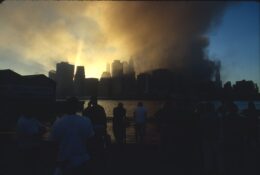
1 World Trade Center begins to enter the final stages of its façade construction more than a decade after the destruction of its predecessors. ©2012 Derek Henry Flood

New York- I was doing some writing yesterday about my experiences in Afghanistan and Central Asia in the months after 9/11. Delving into the assassination of Massoud, the death of an Italian colleague, meeting the Taliban, and all of the other random seeming things that led me to be in New York on 9/11 and in Afghanistan shortly thereafter gave me pause to reflect on the constant of time, the merits of what we call progress. In the near future the new WTC will be completed with tourists, wallets bulging with euros (if the euro survives), pounds, yen and yuan, trampling grounds that to me look more reminiscent of Abu Dhabi’s corniche than the considerably less imaginative original twin towers architected by Minoru Yamasaki in 1965.

4 World Trade Center makes its hulking ascent over lower Manhattan. ©2012 Derek Henry Flood

In Syria, like Father, like Son & Mali Slides from Democracy to Junta

March 26th, 2012 derekhenryflood No comments

Like father, like son. Giant portraits of Bashar and Hafez al-Assad hang on a building in downtown Latakia, Syria in July 2006. I stayed in Latakia, an Alawite stronghold, while traveling from Antalya, Turkey to Lebanon to report on the vengeful Israeli air and ground campaign occurring that summer. ©2006 Derek Henry Flood

New York- It’s been quite a while since I’ve managed to slug out a blog update due to bouts of sickness, busy-ness, and relaxing-ness. None of that is to say that TWD hasn’t been busy though. Where to begin…well things in Syria have obviously gotten much worse. Kofi Annan’s shuttle diplomacy is clearly an abject failure. Meanwhile the Free Syrian Army position visited by TWD in late January has been overrun according to the Telegraph’s Nick Meo who traveled to Guveççi in early March. After the vicious assault on Homs, I figured reprisals against rebellious bastions in Idlib Governorate would surely be next and indeed they were. I had been contemplating a return to Idlib in the spring but for now I’ve scuttled that idea less a major development occurs. All the talk of a Turkish imposed of led buffer zone is just that…talk.

The floundering Syrian revolution is the saddest quarter of the Arab Spring, beating out the quashed, well contained uprising in Bahrain by a long shot.  At least for the near term, it does not appear that any one actor is going to stick their neck out far enough and come to the FSA’s rescue. That is not to say their cause is entirely without hope. Though the stream of Russian-supplied arms through the Black Sea and on to Syria’s slice of the Mediterranean coast certainly does not foster much optimism for those longing to see the end of the conflict. With members of the FSA’s border sentinels back on their heels in Turkish territory, I’m quite curious as to just how that will affect the already rather timid talk of creating some kind of cordon sanitaire hugging the southern Turkish border.

With the fall of Deir ez-Zor last week, the FSA has lost its conduit to smuggled arms emanating from northern and western Iraq. So in sum, things are looking quite bleak. As the FSA has had to concede a succession of tactical retreats throughout March reversing many of their gains from 2011, those that cannot ditch to either Turkey’s Hatay Province or Lebanon’s North Governorate may have to resort to a form of taqiyyah (dissimulation) to save the revolution from Assad’s unforgiving mukhabarat. The bloody war in Syria being waged by Bashar al-Assad is like his father’s much more limited anti-Ikhwan campaign that lasted for several weeks in February 1982 when the city of Hama suffered through a pulverizing scorched earth campaign that was the writ small template for today’s crisis.

The world is paralyzed from acting in any sort of unison on Syria not just because of the well-reported obstinance of Russia and China on the UN Security Council but because that other all-important permanent member, the United States, could not take a firm position because it needed to be clear on what Israel’s position was first. The problem with that scenario has been that the Israelis have not really had a position at all, at least officially. The Israelis, behind the curve more often than not when it comes to change in the Middle East, hoped that the untenable status quo would somehow maintain in Syria so that they could keep their American patrons tightly focused on the Iranian nuclear issue.

Although the US, most notably the State Department, began to put some teeth into their statements regarding the Assad regime, this ends up being empty rhetoric when not backed up by concrete action on the ground of any sort. Now that everyone has twiddled their thumbs for so long, the FSA has lost much of the ground it once de facto controlled.

Though publicly the Israelis find Assad and Co. odious, they would prefer to deal with a rather predictable, supposedly rational enemy they know rather than a collapsed state on their doorstep or an emergent Sunni-led government intent on somehow regaining the illegally occupied Golan which Israel sees as critical to its water supply. And as with Libya, France and Britain cannot really do much in terms of military action without the US. The most important player in the whole deal appears to be the Kremlin which is always a sad state of affairs (see Chechnya, Dagestan et al.). Though every state shall perform diplomacy through the narrow prism of their national interest, having Medvedev (Putin) broker a Syrian peace/stalemate is absurd.  The FSA hoped Turkey would have their back but Ankara is too concerned about a resurgent PKK to do anything of substance on Syria. Turkey fears renewed Syrian assistance to the PKK that would allow them to stage attacks on Turkish security forces from Syrian ground as Hafez al-Assad had done until the late 1990s. Depressing all the way around.

While the world has been consumed by the war raging in the Levant, a very important geopolitical development has taken place in what many might incorrectly assume to be a quiet African backwater. A coup d’état took place in Mali last week as a direct result of the Western (and GCC)-backed overthrow and extrajudicial execution of Qaddafi in Libya last year.

With Qaddafi dead and the war in Libya shrunk down to a few internecine militia skirmishes and inter-ethnic squabbles little understood by the outside world, ethnic Tuareg fighters who had fought under Qaddafi’s monochrome green banner returned to their desert home in northern Mali to commence a new, better armed rebellion. There is a long history of the Libyan state, embodied singularly by Qaddafi’s quixotic territorial ambitions, co-opting the dispossessed Tuareg of Mali and Niger for Libya’s own purposes. Qaddafi thoroughly enjoyed making trouble for his neighbors (and anywhere in the world he deemed counter-revolutionary). He harbored rebel leaders from throughout the Sahel region. This interaction gave birth to the musical collective Tinariwen, arguably the world’s most famous beacon of Tuareg culture.

Now Mali’s Tuareg rebels, principally the MNLA, have launched a new war against the Malian state with arms and vehicles looted from the chaos in Libya last year. Mali’s regular army troops outgunned and even reportedly underfed at surrounded garrisons in the country’s three northern regions of Gao, Timbuktu, and Kidal. In response, a group of disaffected Army officers formed a junta to overthrow the democratically elected government of President Touré (who was just weeks away from peacefully stepping down with new elections on the horizon).

The Arab Spring, which began as a chain reaction of calls for radical reform that quickly morphed into the toppling of strongmen across the region, has now inadvertently toppled a relatively decent democracy. Malian Tuareg who were either no longer needed or no longer welcome in Libya returned home to incite an insurrection to secede from the Malian state to create a Tuareg homeland of ‘Azawad.’ So now poor Mali-recipient of a meager amount of American foreign aid and client state in the Pan-Sahel Initiative/Trans-Saharan Counterterrorism Initiative/AFRICOM jumble-has had a fairly civil, democratically elected leader (himself a former soldier who led a coup in toppling  dictator in 1991) overthrown by an American-trained, hitherto unknown army captain who leads a junta angry about better armed MNLA rebels who are sort of beneficiaries of American/Western policy. This policy in Libya that greatly helped to collapse the Libyan state structure which gave rise a renewed troubles in Mali (and potentially Niger).

The proverbial genie is out of the bottle in the troubled under-governed Sahel and Qaddafi is no longer around to sort things out. NATO declared the Libyan campaign a success when it officially called an end to Operation Unified Protector on October 31, 2011 without any sort of contingency plans for potential state failure in the countries to Libya’s south. Qaddafi loved to stoke conflicts in Africa and now that he’s long dead, he’s still able to cause immense trouble.

My Asia Times Online article above was sourced heavily for a UPI article reprinted below:

Mali Coup: Arab spring spreads to Africa

BAMAKO, Mali, March 26 (UPI) – Last week’s military coup in Mali, triggered by a Tuareg rebellion and ignited by fighters and weapons from Libya, underlines how deeply the fallout from the year-old string of Arab uprisings is spreading from North Africa to non-Arab West Africa.

“The current crisis … has the potential to create further destabilization in the wider Sahara and Sahel regions beyond the current chaos in Mali,” observed analyst Derek Henry Flood, who witnessed the 2011 Libyan conflict at close quarters.

“In simplest terms, the Arab Spring has now bled into Africa. And the mercurial, egomaniacal (Moammar) Gadhafi is no longer available to mediate such deadly disputes.”

The coup by disgruntled soldiers of Mali’s 7,000-man army overthrew President Amadou Toumani Toure, an ex-soldier.

He went into hiding with loyalist troops, including his old 33rd Parachute Regiment, leaving open the possibility of a counter-coup in the nation of 15.4 million.

The irony is that while the Arab leaders targeted by the popular uprisings against them throughout 2011 were dictators and despots like Gadhafi, Mali’s Toure wasn’t one of the autocratic “Big Men” of Africa like the late Sese Seko Mobuto of the Congo or the murderous Charles Taylor of Sierra Leone, but a democratically elected leader.

Indeed, the U.S.-supported Toure had been instrumental in moving Mali, a vast landlocked desert state south of Algeria, from a military dictatorship to a passably democratic state over the last two decades.

Toure “was on the cusp of stepping down at the end of his first term in what should have been a peaceful transition” in presidential elections scheduled to begin April 29, Flood observed.

These aren’t likely to happen now since troops led by mid-level officers seized power Thursday.

Led by a U.S.-trained officer, Capt. Amadou Sanogo, they apparently struck because of discontent in the military that Toure wasn’t doing enough to support them in fighting a rebellion in the long under-governed north along the Algerian border.

The nomadic Tuareg have been a problem for centuries. Their secessionist insurrection had been stiffened by heavily armed tribal fighters who fought for Gadhafi’s regime and had long battled the Bamako government in the non-Tuareg south for independence under the banner of the National Movement for the Liberation of Azawad.

In recent months thousands of tribesmen have returned to Mali, armed with missiles and mortars that left the Malian army badly outgunned. In January, they rekindled the MNLA’s revolt.

The coup itself seems to have been touched off by a mutiny among troops in the north reeling under an MNLA onslaught led by Gadhafi’s Tuareg veterans.

Now the MNLA, having seized most of the north and with the military in disarray, is apparently moving south toward the capital, with government troops reportedly fleeing in the Tuareg path.

Algeria, the regional military heavyweight, is increasingly concerned that Mali will become a haven for al-Qaida in the Islamic Maghreb. This group has been extending its operations across North Africa and into the Sahel states of Mali, Mauritania, Burkina Faso, Niger and Chad.

Other countries, particularly impoverished Niger with vast uranium deposits, are seen as increasingly vulnerable to AQIM and its allies, which have in recent years included Tuaregs across the region.

Many Nigerien Tuaregs also fought in Gadhafi’s forces and they’re going home armed with heavy weapons.

Niger had a coup of its own in 2010 and struggled with a Tuareg revolt in 2007-09.

The MNLA has overrun towns and military bases along Mali’s border with Niger, Algeria and Mauritania.

Algeria, which has ducked the worst of the Arab Spring, is to have elections in May amid widespread discontent. The last thing Algiers wants is more trouble from the southern desert while it battles AQIM.

Links between the jihadists of AQIM and the Tuareg are patchy but they may yet find common cause.

The March 20 arrest in Mauritania of Gadhafi’s infamous and fugitive intelligence chief, Abdullah al-Senussi, after he flew in from Morocco on a forged Malian passport “illustrates that the effects of regime change in Libya will be felt across Africa for some time to come,” Flood noted.

“It’s now clear that the consequences of the Western-backed Libyan campaign have now unequivocally traveled from North Africa to what is distinctly West Africa.”