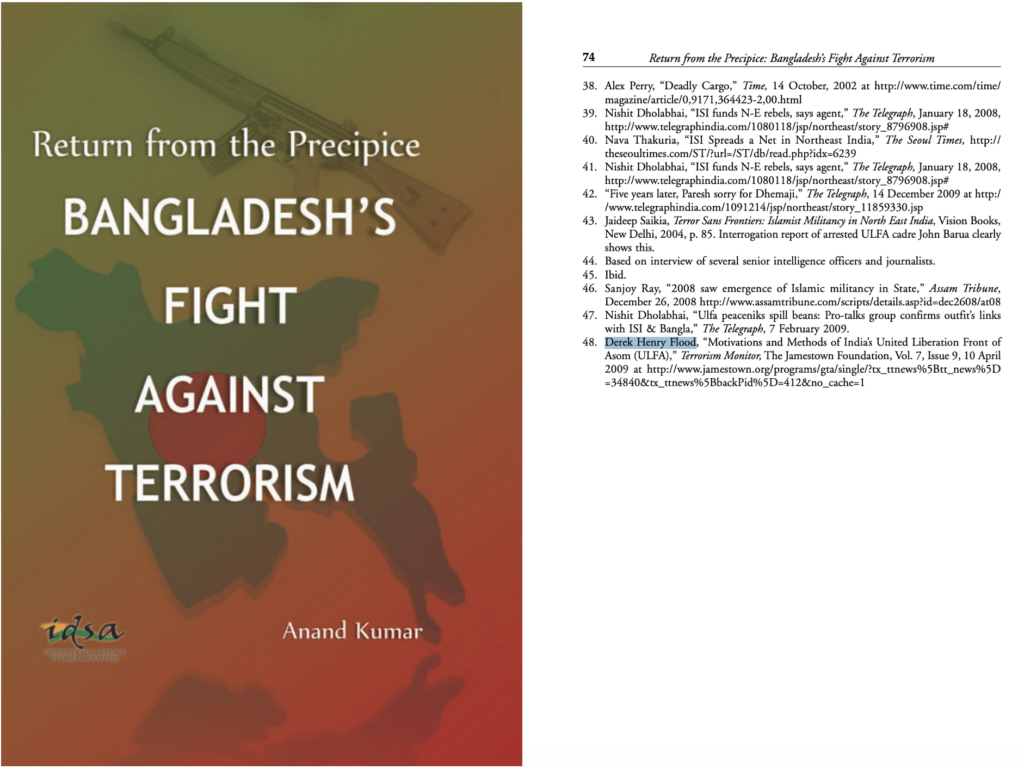
New York- My fieldwork in northeast India’s troubled Assam state was cited in Bangladesh’s Fight Against Terrorism: Return from the Precipice by author Anand Kumar of the Manohar Parrikar Institute for Defence Studies and Analyses in New Delhi. Though much of the book focuses on radical religiously-oriented terror outfits, it also explores Bangladesh’s role as a sanctuary for secular ethno-nationalist insurgent movements in northeast India such as ULFA-the United Liberation Front of Asom (Assam).
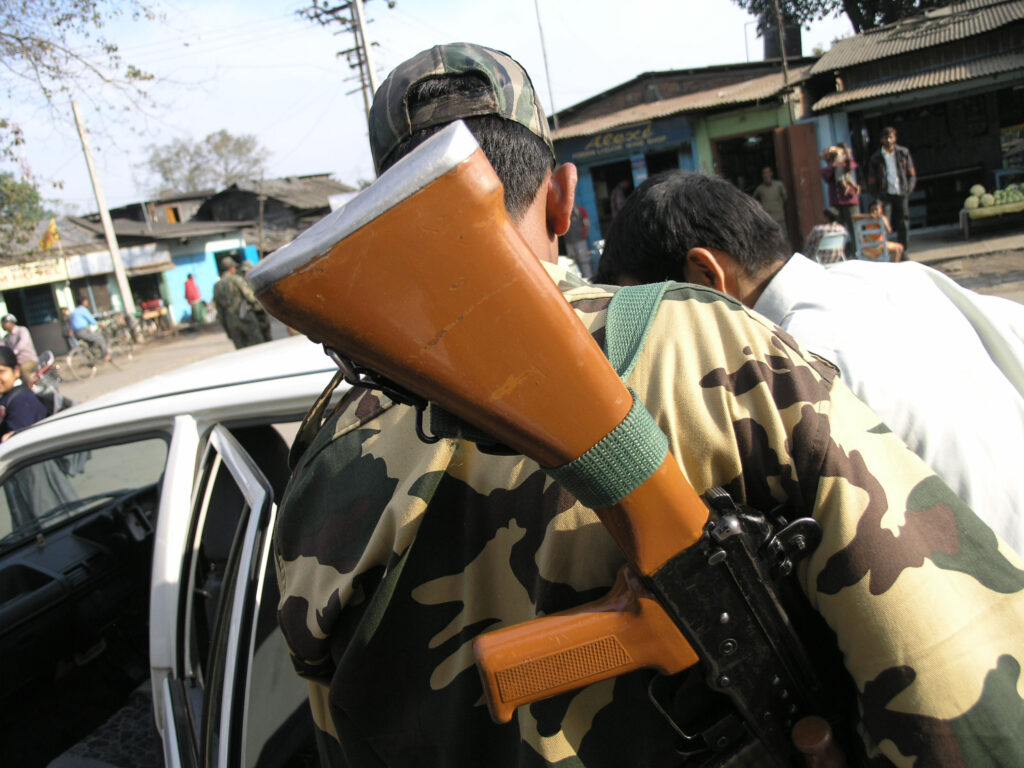
As Kumar points out, tolerance of or outright assistance to armed Indian non-state groups fluctuated as the pendulum of power in Dhaka swung back and forth between the BNP and the Awami League. over the years. External support for northeastern militants dates back to when what we today know as Bangladesh was East Pakistan from 1947-1971. So well after Bangladesh was liberated from Pakistan with great Indian assistance, Pakistan’s notorious Inter-Services Intelligence agency continued to remain active in independent Bangladesh to keep Indian security forces busy in their country’s eastern extremities with the strategic thinking it would make it more difficult for Delhi to focus to tightly on defending occupied Kashmir and along the western Radcliffe Line cleaving the Punjab in two and separating Sindh from Rajasthan and Gujarat in the sunbleached wastes of the Thar desert.
Additionally my journalism for Asia Times Online was also cited in the paper Indo-China dispute intertwined with north east insurgency of India by Amanya Bose, a research scholar at Jadavpur University in Kolkata.