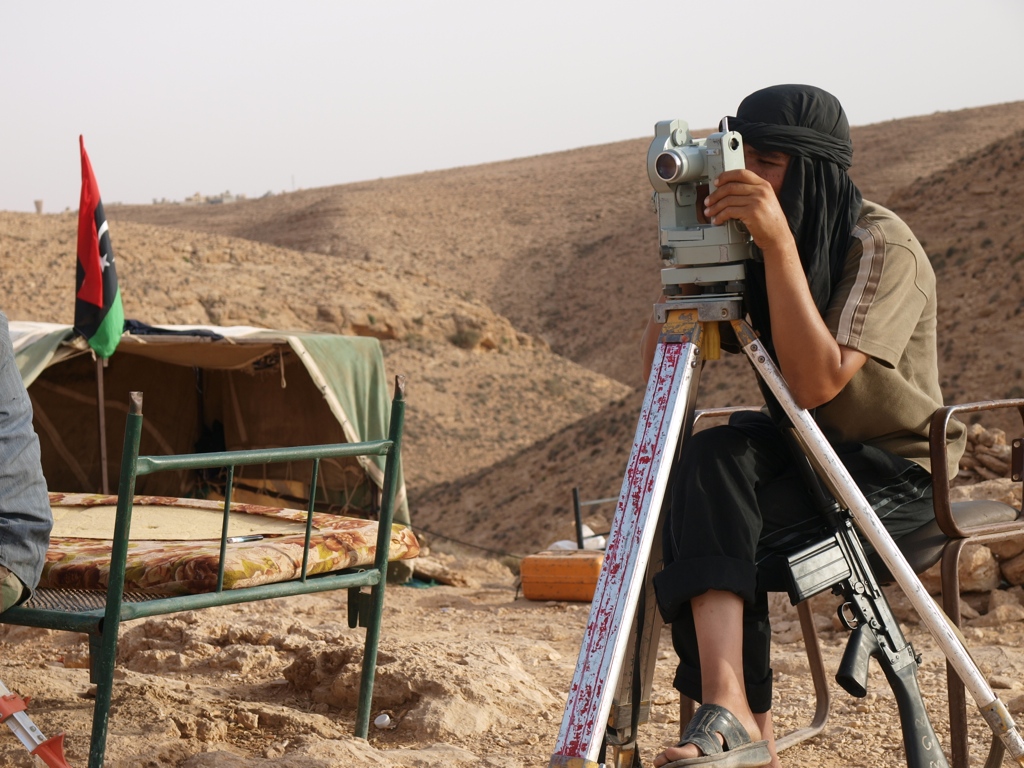
Thera- My fieldwork in Triplotania in the summer of 2011 quoted by CNN was cited by Anna Samson in her PhD thesis titled “Finishing the job: How American presidents justify exit strategies in humanitarian interventions” at The Australian National University in Canberra.The original article in Samson’s end notes by veteran UK journalist Tim Lister, “Analysis: As Libyan conflict grinds on, NATO’s mission shifts,” weirdly can’t be accessed. Not sure what is going on at CNN these days but no one seems to be properly managing the news behemoth’s vast back catalog as with my previous post about how the full 1997 package by Peter Arnett on Osama bin Laden is nowhere to be found on CNN’s Youtube account.
Anywho, thank you to Ms. Samson for citing my high-risk reporting. It’s so validating to know that my efforts weren’t in vain from time to time. Glad she was able to dig up the lost Lister article I was once featured in.
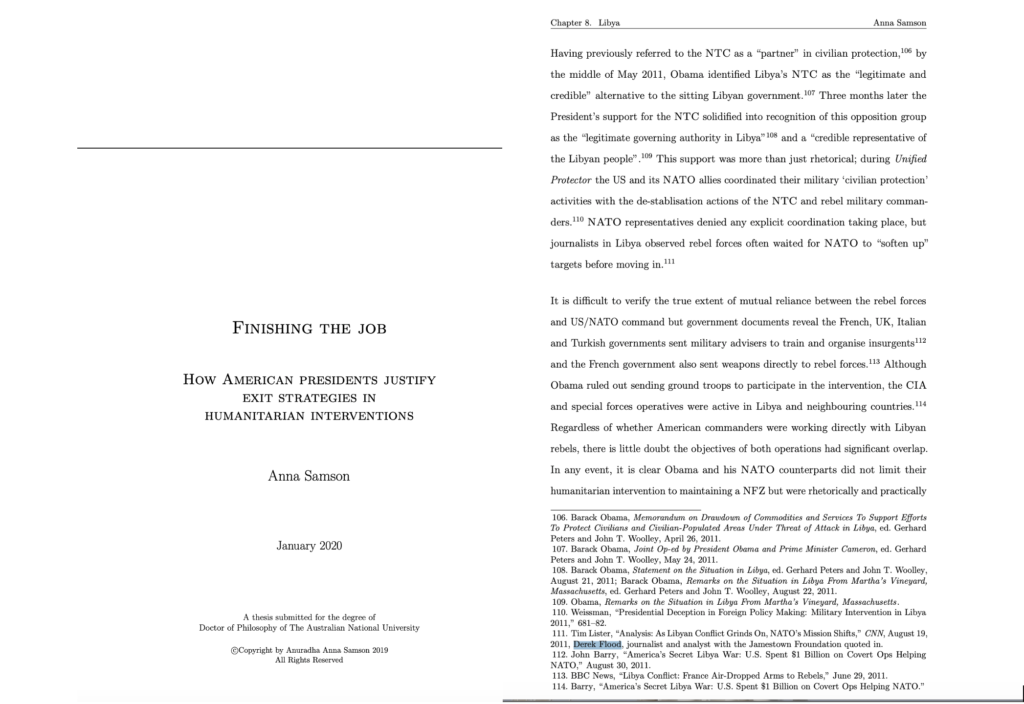
Ms. Samson’s quite noble thesis abstract is the following;
“Humanitarian interventions to stop mass atrocities are among America’s most
controversial uses of military force overseas since the end of the Cold War. While
there is much research analysing the justifications for and conduct of humanitarian
interventions, there is very little scholarly investigation of how and why interventions
end. Indeed, successive US presidents have struggled to implement exit strategies
from humanitarian interventions with the outcome often dismissed as ‘mission creep’.
In this thesis, I use US presidential rhetoric as a way to understand exit strategy
dynamics in humanitarian interventions. In particular, I explore how American
presidents publicly justified their exit strategies in four interventions from 1991-
2011—northern Iraq, Somalia, Kosovo and Libya. My normative concepts analysis of
more than 700 texts shows how presidents craft exit strategies through practices of
public justification and legitimation to their domestic audience. I argue a president’s
discursive engagement is constrained by three groups of normative expectations
shaping the realm of imagined possibilities for how America should use force when
responding to humanitarian crises; specifically the US should: (1) fulfil its moral
responsibility to stop atrocities, fight evil and promote political transformation; (2)
win its military engagements; and (3) avoid quagmires. These expectations frame
justifiable uses of military force, but also exist in tension with one another, and are
in turn affected by changing battlefield conditions, past intervention experiences,
domestic and international pressures, and personal preferences. How presidents
navigate these tensions affects their troop withdrawal decisions, including failures to
implement exit strategies.
My thesis is the first comparative analysis of America’s exit strategies in four of
the most significant humanitarian interventions of the post-Cold War era. By using
public justification analysis to illuminate decision-making dynamics, I overcome the
shortcomings of applying extant victory, war termination and end state planning
theories to humanitarian interventions. By identifying the normative constraints on
exit strategy decision-making, I demonstrate how and why mission creep occurs. My
thesis provides evidence for military planners and policy advisers who are considering
using force to stop a mass atrocity, to take normative expectations seriously in
considering when and how troops will withdraw.”