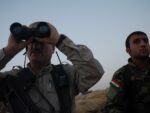
New York- My work in Syria and Iraq was cited by the Library of Congress and the London-based openDemocracy respectively. My fieldwork in northern Syria’s Idlib governorate for Janes Islamic Affairs Analyst was given a hat tip in “Unrest in…
New York- My work in Syria and Iraq was cited by the Library of Congress and the London-based openDemocracy respectively. My fieldwork in northern Syria’s Idlib governorate for Janes Islamic Affairs Analyst was given a hat tip in “Unrest in…
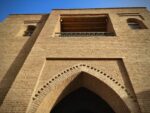
New York- Something I happened in my years covering the era of the terror wars known in the Anglosphere more formally as Operation Inherent Resolve-more simply the war against the so-called Islamic State-was the mystical sound of the tanbur. The…
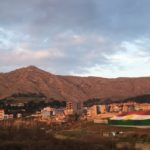
Duhok- I’ve arrived in this damp, green mountainous city in northern Iraq as part of my ongoing journey toward the Autonomous Administration of North and East Syria. After a few days getting with Erbil and the Sorani Kurdish & Iraqi…
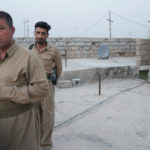
New York-I have a new piece out in the September 2018 issue of the Combatting Terrorism Center at West Point’s monthly Sentinel journal on IS’s insurgent rear bases and operations in Iraq’s northern federally controlled governorates of Kirkuk, Salah ad-Din, and…
Kirkuk-I have a new piece out with Jane’s Intelligence Review (subscription required) in the UK on my latest findings in troubled Kirkuk governorate and the Disputed Territories. Following the now notorious events of 16 October last year in which the PUK…
Barcelona- I have an article out in the October issue of the CTC Sentinel entitled “The Hawija Offensive: A Liberation Exposes Faultlines,” based on my fieldwork in Kirkuk governorate in August and September. I began this work before the offensive…
Erbil- I have a new article out for Jane’s Intelligence Review on the forces arrayed around what has come to be known as the ‘Hawija pocket’ in southwestern Kirkuk governorate. The traditionally Sunni Arab town of Hawija, a restive northern bastion of…
Barcelona- Very proud to have an article from my recent trip to Iraq’s Ninewa Governorate in the August issue of the Combating Terrorism Center at West Point’s Sentinel publication. As you may have read or heard, there has been much…
Barcelona- After an egregiously long sabbatical in the chunky, ‘polar vortex’ torn streets of NYC, I finally made it back across the Atlantic. I put plans for returning to Iraq’s Green Line and Ukraine’s chaotic Donbas region on hold for the…
Erbil- Here are a handful of snapshots from my iPod from my day running around the capital of Iraqi Kurdistan while trying to get situated.
Diyarbakir- Though I try not to get overly personal with TWD’s posts as it’s more of a news/analysis site, I’ve just arrived in southeastern Turkey (northern Kurdistan to some) and this marks twenty years of my travels in the Middle…
New York- I have a new article out on how the ongoing war in Syria is helping stoke sectarian tensions in Iraq that are manifesting themselves in the form of daily suicide bombings, shootings, and dual massive AQ jailbreaks. My article…
Barcelona- Partly out of boredom and partly out of the itch to simply create something new out of old, I threw together this photo montage over the weekend. In this era of digital photography where one shoots thousands of frames…
Antakya- Doing some googling to see where some of my recent Syria work might have ended up, I stumbled upon some references to my work from close to a year ago that I missed in the chaos of the time.…
New York- And so begins a new year and an as yet unnamed new decade (the twenty teens?). Old conflicts from the disaster that was the last decade will irreversibly spill into this new one and nightmares from the 1990s…
Washington D.C.- The Jamestown Foundation is hosting a conference on Thursday, March 4th at the Carnegie Endowment for International Peace (at 1779 Massachusetts Avenue Northwest; Metro Dupont Circle) on the country-wide elections to be held on March 7th and the…
New York- My former editor and colleague at Asia Times Online, Charles McDermid, has an article today with local Suleimani-based reporter Rebaz Mahmood on the fourth and perhaps ultimate death sentence for “Chemical” Ali Hassan al-Majid, the most brutal enforcer of…
I have a new piece in this week’s edition of Terrorism Monitor on the Jamestown Foundation site that can be read here. It is the first long form interview with PJAK leadership that I’m aware of.
Mardin, Turkey- After a long two weeks in Iraq, I’ve returned to northern Kurdistan a.k.a. southeast Turkey. I wasn’t able to update the site much while in Iraq as the poorly named Hawler Palace Hotel did not have an internet…
Erbil, Iraq- I have a piece in today’s Asia Times about the Change movement and the state of Kurdistani politics that can be read here.
Erbil, Iraq-Still waiting for some contacts to come through on this next story, won’t/can’t announce what it is just yet…just keeping my fingers crossed.
Erbil, Iraq- Still trying to organize my next project here, an expensive waiting game….
Erbil,Iraq-It’s been six long years but I finally made back to Iraq though i have so little cash, it’ll be a short stay it looks like. Hopefully with my never say die, give ’em hell attitude, I can accomplish something…
Adana, Turkey- I’m in another utterly random hotel in an utterly random city along Turkey’s Mediterranean coast en route to northern Iraq. About to get on yet another all day bus ride and plan to cross into Iraq tomorrow. Have…
In early March 2003, with tens of thousands of American soldiers drilling and hydrating in the Kuwaiti desert, I had arranged to meet with a member of the famous Barzani clan at New York’s Waldorf-Astoria Hotel. In hopes of setting…